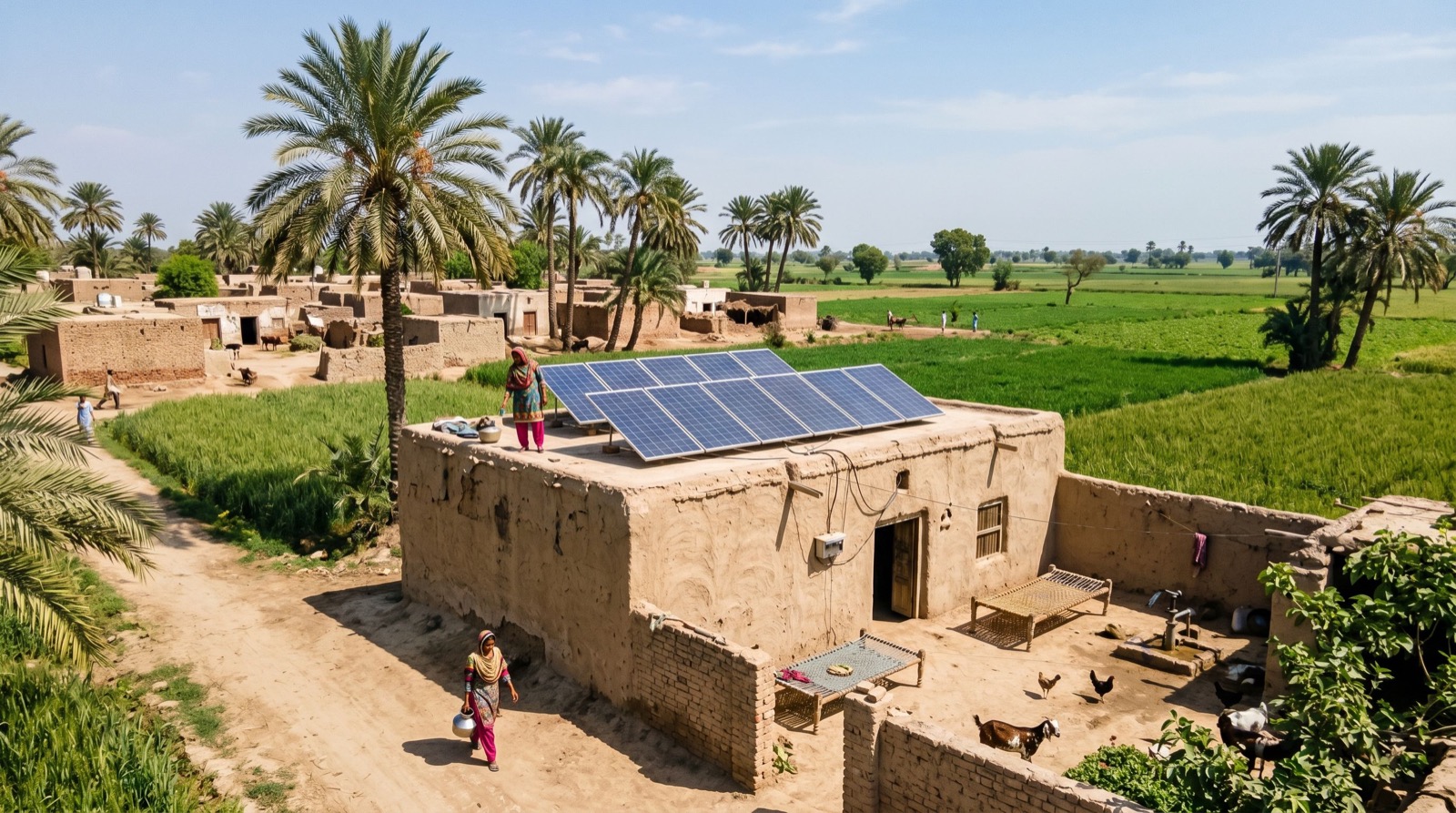
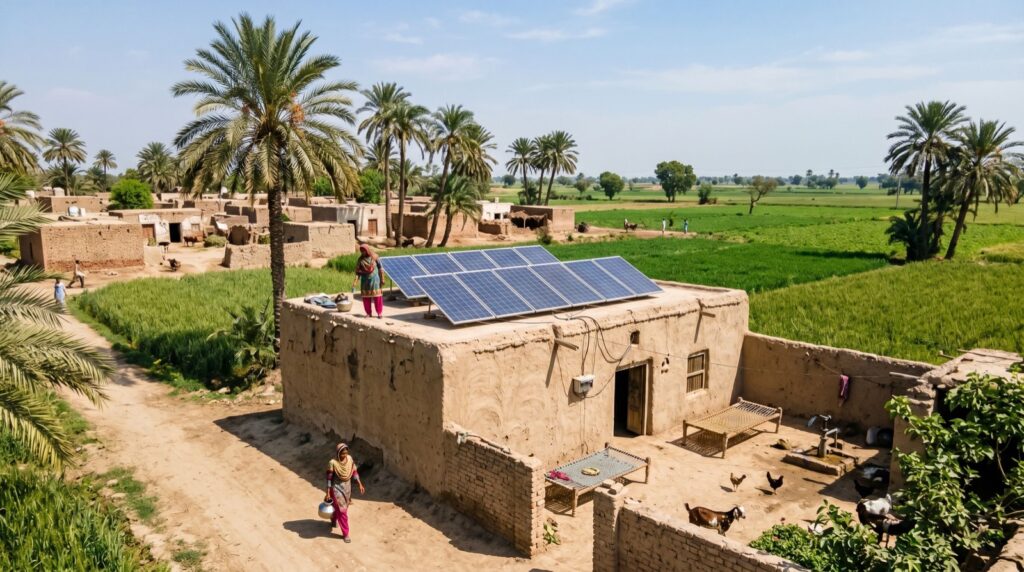
Choosing a good solar inverter price in Pakistan is where many rooftop projects quietly succeed or fail. The panels grab attention, but the inverter is the brain that converts DC into usable AC, manages your batteries, and decides how much you save. In 2026, with hybrid technology becoming the default for grid-tied homes, understanding inverter types and their real economics matters more than ever.
This guide focuses on the money side: how inverter selection, system sizing, and net metering combine to determine your return on investment. If you want a system that actually pays for itself in a few years rather than a decade, read on before you sign any quotation.
What does an inverter actually do in a solar system?
The inverter is the heart of your installation. It takes the direct current produced by your panels and converts it into the alternating current your appliances and the grid use. Modern units also handle battery charging, grid export, and system monitoring through an app.
There are three broad categories you will be quoted this year:
- On-grid (grid-tied): Cheapest option, exports surplus to the grid but provides no backup during outages.
- Off-grid: Runs entirely on batteries, ideal for remote sites with no reliable grid connection.
- Hybrid: The 2026 favourite — combines grid export, battery backup, and outage protection in one unit.
For most Pakistani homes dealing with both rising tariffs and occasional load-shedding, a hybrid inverter delivers the strongest lifetime value even though it costs more upfront.
How much does a solar inverter cost and what drives the price?
Inverter pricing scales with capacity, brand tier, and whether it supports batteries. A basic 5 kW on-grid unit sits at the low end, while a high-capacity hybrid with lithium compatibility commands a premium. To compare fairly, look at the solar inverter price in Pakistan across matched capacities rather than headline figures alone.
Factors that move the price
- Rated capacity (kW): Larger inverters cost more but let you expand your array later.
- Topology: Hybrid units cost more than plain on-grid because they include battery management.
- Efficiency and MPPT count: Dual-MPPT models handle split roofs and shading better, adding output.
- Warranty and support: Five to ten year warranties with local service centres justify a higher price.
Comparing inverter types by cost and payback
The table below shows how the three categories stack up on the factors that decide your ROI. Use it to weigh upfront cost against long-term savings.
| Inverter type | Upfront cost | Backup during outage | Net-metering export | Typical payback |
|---|---|---|---|---|
| On-grid | Lowest | No | Yes | 3–4 years |
| Hybrid | Medium–High | Yes | Yes | 4–6 years |
| Off-grid | High (battery-heavy) | Yes | No | 6–8 years |
How is solar ROI calculated in Pakistan for 2026?
Return on investment is simply your total system cost divided by your annual savings. The savings come from two streams: the electricity you no longer buy from the grid, and the credit you earn by exporting surplus under net metering, regulated by NEPRA.
Here is a simplified worked example for a 10 kW grid-tied home system:
- Daily generation: roughly 40–45 units in good conditions.
- Monthly self-consumption plus export credit can offset a large slice of a heavy household bill.
- At current tariffs, well-sized systems commonly pay back in 3 to 5 years, then deliver free power for the remaining 20-plus years.
One practical insight from real installations: oversizing your array slightly relative to the inverter (a modest “DC-to-AC ratio” above 1) squeezes out more morning and evening production, improving ROI without buying a bigger inverter.
Right-sizing your system for the best return
The biggest ROI killer is a mismatched system — panels too big for the inverter, or batteries you barely use. Start from your bills, not from a salesperson’s package. Sizing correctly protects both your budget and your savings.
Work with a qualified solar company in Pakistan that models your consumption profile, roof orientation, and net-metering eligibility before quoting hardware. Choosing among quality service providers who show transparent calculations is the surest way to avoid an oversized, overpriced install.
A simple sizing sequence
- Calculate average daily units from twelve months of bills.
- Divide by local sun hours (about 4.5) to get array size in kW.
- Match inverter capacity to array size, allowing headroom for expansion.
- Add battery capacity only for the loads you truly need during outages.
Residential versus commercial inverter economics
Homes and businesses justify inverters differently, and confusing the two leads to poor buying decisions. A household mainly wants outage protection and a modest bill cut, so a single hybrid unit usually suffices. A business, by contrast, chases the shortest payback on a much larger load.
Commercial rooftops often run three-phase inverters sized well above 25 kW, because their daytime consumption aligns perfectly with peak solar production. That alignment is the secret to fast commercial ROI — a factory or shop uses the power exactly when the panels make it, minimising reliance on stored or exported energy.
- Homes: single-phase hybrid, 5–12 kW, prioritise backup and net-metering export.
- Small offices: single or three-phase, 10–20 kW, balance backup with self-consumption.
- Industry: three-phase, 25 kW and up, maximise daytime self-consumption for the quickest payback.
If your business runs mostly in daylight hours, an on-grid inverter can deliver a payback closer to three years because almost every generated unit offsets an expensive purchased one. That is a materially different calculation from a home that consumes most power after sunset.
Monitoring and maintenance protect your returns
Buying the right inverter is only half the job — keeping it productive over its life protects the ROI you calculated. Most modern inverters ship with a monitoring app that reports generation, faults, and grid export in real time. Check it regularly.
Watch for these warning signs that silently erode savings:
- Sudden output drops: often dust on panels or a failing string; clean and inspect promptly.
- Frequent fault codes: may signal grid voltage issues or a cooling fan failure inside the inverter.
- Rising internal temperature: ensure the inverter is mounted in shade with airflow, never in direct sun.
A quick original tip: photograph your inverter’s daily peak-output figure on a clear day right after commissioning. That baseline lets you spot performance decay months later before it costs you serious money. Small habits like this keep your payback timeline on track.
Frequently Asked Questions
Is a hybrid inverter worth the extra cost in 2026?
For most homes, yes. A hybrid inverter adds outage backup and battery readiness on top of net-metering export. Although the upfront cost is higher than on-grid, the combined savings and reliability usually justify it within four to six years.
How long does a solar inverter last?
Quality inverters typically last 10 to 15 years, shorter than the 25-year panel life. Budget for one inverter replacement over the system’s lifetime, and choose a brand with a local service centre so repairs and warranty claims are straightforward.
What size inverter do I need for my home?
Match the inverter to your panel array and daily consumption. A common home range is 5 kW to 12 kW. Size it slightly above your current array so you can add panels later without replacing the inverter, protecting your long-term ROI.
Does net metering really improve payback?
Significantly. Net metering lets you export daytime surplus and draw it back as credit, turning excess generation into bill reduction. Combined with self-consumption, it is the main reason well-designed systems in Pakistan pay back in just a few years.
Conclusion
A smart solar inverter price in Pakistan is not about finding the cheapest box — it is about matching the right topology and capacity to your consumption so the system pays for itself fast. Weigh hybrid backup against on-grid economy, size everything from your real bills, and insist on transparent ROI figures. Ready to see honest inverter pricing and a system built for genuine savings? Compare options with a trusted provider and start your payback clock today.