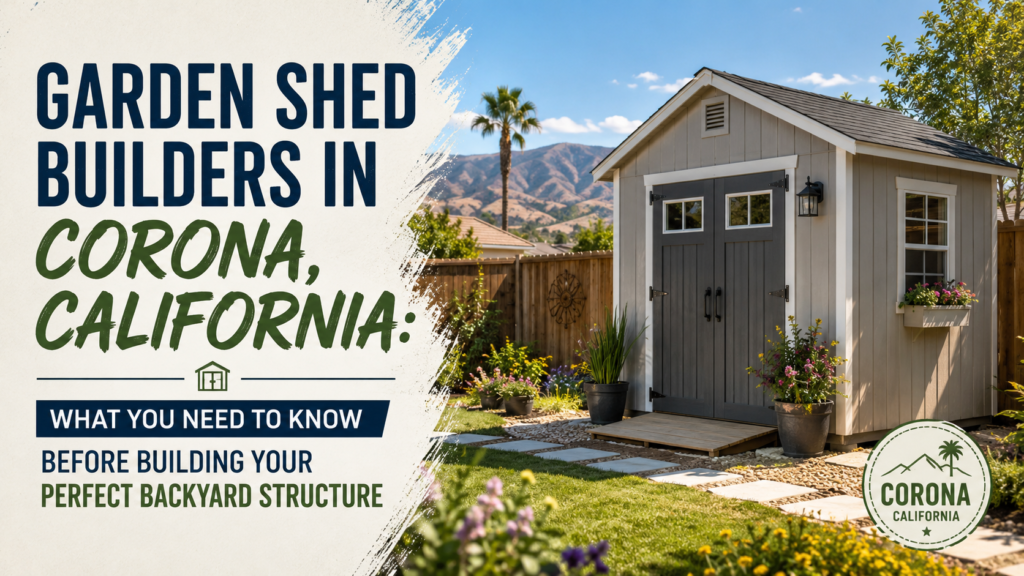
A garden shed is one of the most practical and satisfying additions a homeowner in Corona, California can make to their property. In a city where year-round sunshine makes outdoor living, gardening, and landscaping central to the residential experience, having a dedicated space to store tools, equipment, and supplies organized, protected from the elements, and out of sight transforms how a property is used and maintained. Garden sheds in Corona range from compact tool storage structures measuring 6×8 feet to substantial multi-purpose buildings large enough to serve as workshops, potting rooms, or hobby spaces. Understanding what goes into building a quality Garden Shed Builder Corona in the Inland Empire helps property owners make decisions that serve them well for years.
Why Garden Sheds Make Particular Sense in Corona
Corona’s climate and outdoor lifestyle create genuine need for organized storage that a garage alone often cannot meet. The Inland Empire’s year-round growing season means gardening tools, irrigation supplies, fertilizers, pest control products, and seasonal plantings are in active use for most of the year. Lawn maintenance equipment mowers, edgers, trimmers, blowers represents a significant investment that benefits from protected storage. Pool and outdoor furniture equipment for the backyard pools that are common in Corona’s residential communities needs seasonal storage. A well-designed garden shed addresses all of these storage demands while keeping the garage available for its primary purpose.
Additionally, Corona’s hot summers with temperatures regularly exceeding 100°F mean that items stored in an uncovered area, or in a poorly ventilated shed, can be damaged by heat. A properly designed and ventilated garden shed protects temperature-sensitive items: seeds, potting soils, liquid fertilizers and herbicides, rubber gaskets and hoses, and similar materials that degrade when exposed to prolonged extreme heat.
Types of Garden Sheds
Garden sheds in Corona are available in several construction types, each with different characteristics for the Inland Empire climate:
- Wood Frame Sheds: The traditional and most customizable option. Wood-framed sheds built with quality lumber, treated siding, and properly installed roofing can last decades with appropriate maintenance. In Corona’s dry climate, exterior wood requires periodic painting or staining and sealing to protect against UV bleaching and occasional rain. Wood sheds offer the widest range of sizes, layouts, and aesthetic options and can be matched to the architecture and color scheme of the main residence.
- Vinyl/Resin Sheds: Manufactured from durable PVC or resin materials, these sheds are largely maintenance-free they do not require painting, do not rust, and resist rot. In Corona’s UV-intensive environment, quality vinyl sheds maintain their appearance better than lower-grade products. They are available in a limited range of standard sizes and styles, without the full customization range of wood-built structures.
- Metal Sheds: Galvanized steel sheds are durable and cost-effective for basic storage. The primary consideration in Corona’s climate is interior temperature a metal shed absorbs heat rapidly in summer and can reach extremely high internal temperatures. Proper ventilation, insulation, or strategic positioning to limit direct afternoon sun exposure mitigates this. Metal sheds are best suited to storage of items that are not temperature-sensitive.
- Custom-Built Structures: For homeowners wanting a garden shed that matches the home’s architecture, accommodates specific storage or workspace requirements, or exceeds the standard sizes available in prefabricated products, custom construction by a local shed builder is the ideal path. A custom-built garden shed in Corona can incorporate features like potting benches, pegboard walls, built-in shelving, workshop lighting, GFCI electrical outlets, and even a small utility sink creating a genuine outdoor workspace rather than simply a storage box.
Size Considerations for Corona Garden Sheds
Choosing the right size is one of the most important and commonly underestimated decisions in garden shed planning. A very common experience among shed buyers is that the shed that seemed adequate when ordered fills up faster than expected, leaving the owner wishing they had sized up. General guidance for garden shed sizing in Corona:
- 6×8 or 8×8 feet: Entry-level sizes suited for a single homeowner’s basic garden hand tool storage. Adequate for a small urban lot with minimal equipment. Very limited interior workspace.
- 10×10 or 10×12 feet: The most popular size range for standard residential lots in Corona. Accommodates a riding mower or multiple large pieces of equipment alongside organized tool storage. Allows a small work surface.
- 12×16 or 12×20 feet: Suitable for properties with significant outdoor equipment, multiple garden areas, or property owners who also want a meaningful workspace for potting, crafts, or light hobby work.
- 16×24 and larger: Large custom structures that function as genuine outbuildings rather than sheds. At these sizes, the structure approaches barn or workshop territory, with capacity for extensive tool organization, workspace, and potentially separate storage zones.
The right size also depends on available yard space, setback requirements from property lines (addressed below), and HOA restrictions on accessory structure sizes.
Foundation Types for Garden Sheds in the Inland Empire
A quality garden shed needs an appropriate foundation to prevent settlement, moisture intrusion, and structural movement over time. In Corona’s soil conditions which include areas of expansive clay that swell and contract with moisture variation the foundation type matters more than in some other climates. Common foundation options for garden sheds in the area include:
- Concrete Slab: The most stable and durable option. A poured concrete slab provides a flat, level floor that resists moisture, pests, and movement. The ideal choice for larger sheds, sheds with workshop functions, and those in areas with expansive soils.
- Gravel Pad: A layer of compacted gravel provides drainage and a relatively stable base for smaller sheds. Less permanent than concrete but practical for structures that may be relocated.
- Concrete Piers or Blocks: Precast concrete blocks or poured piers at the corners and mid-spans support the shed’s floor frame. Provides good drainage beneath the structure and some degree of adjustment if settling occurs.
- Pressure-Treated Skids: Large-dimension treated lumber skids laid on compacted gravel provide an economical base for small to medium sheds. Practical for standard prefab sheds.
Permits and HOA Requirements in Corona
Before building any garden shed in Corona, two sets of requirements must be addressed. First, City of Corona building permits: under California Building Code, accessory structures above a certain size threshold typically 120 square feet require a building permit. The permit ensures the structure meets minimum construction standards and is appropriately sited on the property. Second, HOA architectural review: a significant proportion of Corona’s residential neighborhoods are governed by HOAs that regulate accessory structure size, materials, colors, and placement. Reviewing the CC&Rs and submitting an architectural review application before beginning any shed project avoids the costly and frustrating experience of building something that must subsequently be modified or removed.
Ventilation and Electrical in a Corona Garden Shed
Two features that dramatically improve the functionality of a garden shed in Corona’s climate deserve specific attention. Ventilation is essential without adequate air movement, a shed in the Inland Empire sun becomes an oven in summer, damaging stored items and making the interior unusable as a workspace. Ridge vents, gable vents, and wall vents work together to create natural convection airflow. An active vent fan is a worthwhile addition for any shed used as a workspace. Electrical service to the shed properly installed sub-panel or dedicated circuits enables lighting, power tools, a small refrigerator for garden supplies, and charging stations. Working with a licensed electrician to properly trench and install service to an outbuilding ensures safety and compliance with California electrical codes.
Conclusion
A well-planned and properly built garden shed in Corona is a long-term investment in the functionality, organization, and enjoyment of a property. Understanding the construction types available, sizing the structure appropriately for actual storage needs, selecting a foundation suited to Inland Empire soil conditions, and navigating the City of Corona’s permit requirements and HOA restrictions ensures a shed that serves its purpose effectively, looks appropriate on the property, and holds up through decades of Southern California weather.